Supermarket Stroopwafels vs Fresh: Trader Joe's, Costco and the Real Thing
That Trader Joe's or Costco stroopwafel is a good start. Here is what makes the fresh, handmade version from Amsterdam different, and how to get it shipped to you.
By Daniel MellicovskyBaker and owner, Melly's Stroopwafels
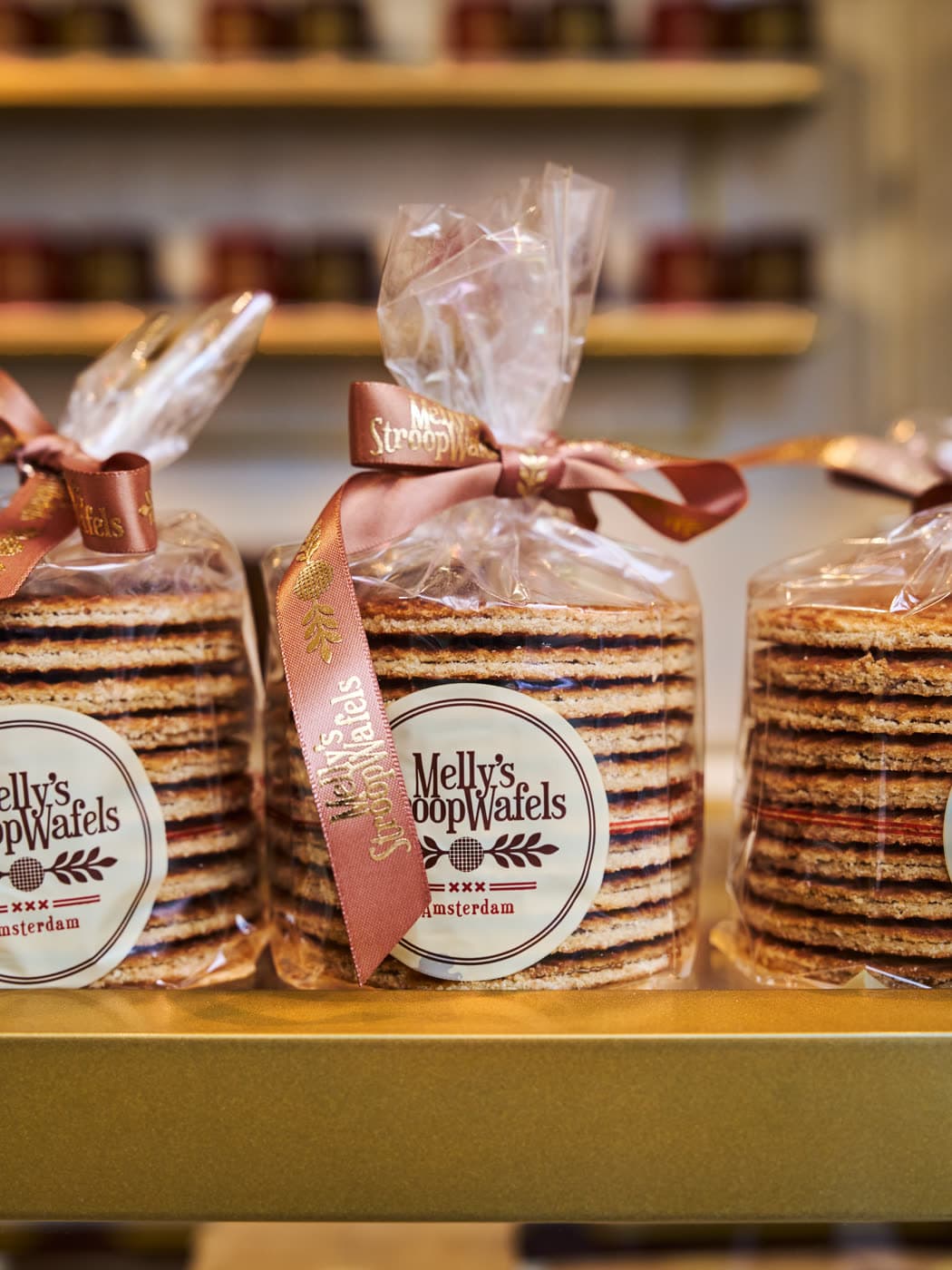
If you have ever picked up a stroopwafel at Trader Joe's or Costco, you have already met the Dutch caramel waffle. Chances are it came from Daelmans, one of the largest Dutch stroopwafel exporters, whose tins and bags line supermarket shelves across the US. It is a good introduction. It is not quite the real thing.
What the supermarket version is built for
A packaged stroopwafel has to survive a container ship, a warehouse and months on a shelf before anyone opens it. That means it is baked to be shelf-stable first: firmer wafers, a caramel filling engineered to hold, and a long best-before date. It is a fine everyday treat, and there is nothing wrong with reaching for one at the store.
What "fresh" actually means
In Amsterdam, stroopwafels are usually a different experience. Stalls like Van Wonderen sell them warm off the iron, straight from the pan, the caramel still soft enough to stretch. That is the stroopwafel most visitors fall for, and it does not travel by container ship: small batches, sold within days, meant to be eaten while still a little warm.
Ours, shipped to you
We bake the same way at Melly's Cookiebar, by hand, in small batches, the family recipe we have used since 2003. We cannot ship it warm off the iron, but we pack it fresh and send it out fast, so it arrives closer to a real Amsterdam stroopwafel than anything shelf-stable ever will. Order a tin, shipped across the US, the UK and Europe.
Once yours arrive, see how to store stroopwafels to keep them fresh, or read where to find them fresh in Amsterdam if you are visiting in person.
Taste it warm in Amsterdam
Order fresh stroopwafels to your door, or learn to make your own at a Melly's workshop in the heart of the city.