Traditional Dutch Food: The Treats, Snacks and Dishes Worth Trying
Dutch food has a modest reputation and a very good snack game. The treats, fried snacks and winter dishes to try, explained by a bakery in Amsterdam.
By Daniel MellicovskyBaker and owner, Melly's Stroopwafels
Dutch food has a modest reputation, and the Dutch are the first to joke about it. Dinner here is practical: potatoes, vegetables, something from the butcher. But traditional Dutch food is not really about dinner. It is about what happens around it: the snack from the wall at midnight, the herring at the market, the biscuit that comes with every single coffee. That is where this country is genuinely good.
We run a bakery in the centre of Amsterdam, so we will start with the Dutch treats, move on to the fried snacks and finish with the winter dishes. For each one: what it is, how to order it and when the Dutch actually eat it.
Dutch sweet treats
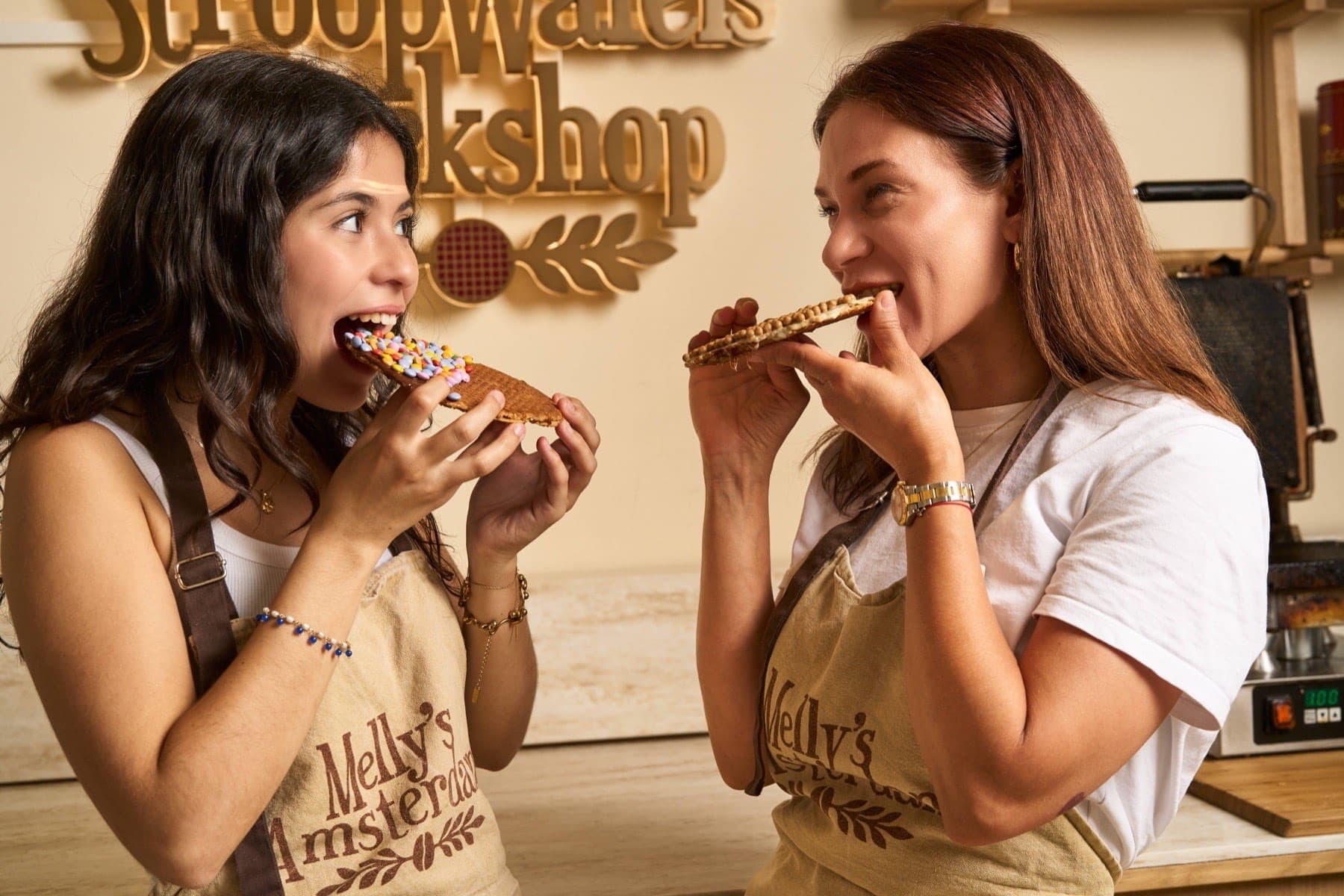
- Stroopwafel. Two thin layers of waffle pressed hot around a caramel syrup, born in Gouda in the nineteenth century. The packaged ones are for the top of your coffee cup, where the steam softens the caramel. The fresh ones, pressed in front of you and still warm, are a different thing altogether. We wrote the long version in what is a stroopwafel.
- Poffertjes. Small, puffy pancakes made with yeast and buckwheat flour in a dimpled cast-iron pan, served a dozen or so at a time with butter and icing sugar. Market and fairground food.
- Appeltaart. Dutch apple pie is deep, with a firm, buttery crust, big pieces of apple, cinnamon and often raisins. It comes with whipped cream, met slagroom, and every brown cafe has one on the counter.
- Oliebollen. Balls of yeast dough, plain or with raisins, deep-fried and covered in icing sugar. They belong to December and above all to New Year’s Eve, when stalls sell them on every square.
- Drop. Liquorice, and a national habit. It runs from sweet (zoete drop) to salty (zoute drop) to double salted (dubbelzout), which most visitors try exactly once. Start with the sweet one.
- Hagelslag. Chocolate sprinkles on buttered bread, eaten for breakfast by adults with jobs. Nobody here finds this strange.
- Speculaas and pepernoten. Spiced biscuits pressed in wooden moulds, and the small crunchy spiced nuggets thrown around at Sinterklaas. Both arrive in the shops in early autumn. More on those in Christmas in the Netherlands.
- Tompouce. A brick of pastry cream between two sheets of puff pastry, with pink icing on top that turns orange on King’s Day. There is no dignified way to eat one.
- Vla. Pourable custard sold in cartons next to the milk, in vanilla, chocolate or both in one carton. The standard weekday dessert.
- Ontbijtkoek. A dark, soft spiced loaf made with rye, sliced and spread with butter. The name means breakfast cake, but it mostly turns up with coffee.
Dutch snacks
- Bitterballen. Crisp deep-fried balls filled with a thick beef ragout, served with mustard. This is what you order with a beer at a borrel, after-work drinks. The inside is hotter than you think.
- Kroket. The same idea in the shape of a log, often eaten in a soft white roll as a broodje kroket. You can pull one from a coin-operated wall of little glass doors, the automatiek, which is an experience in itself.
- Frikandel. A long, skinless deep-fried sausage of minced meat. Order it speciaal and it comes split open with mayonnaise, curry ketchup and raw onion.
- Patat. Thick-cut fries in a paper cone, with mayonnaise by default. Patatje oorlog adds peanut satay sauce and raw onion. In the south of the country they are called friet, and people will correct you.
- Haring. Raw herring, lightly cured in salt, served with chopped onion and pickles. In Amsterdam it comes cut into pieces with a toothpick; elsewhere you hold it by the tail and lower it in. The new season’s catch, Hollandse Nieuwe, arrives in June.
- Kibbeling. Chunks of white fish in batter, deep-fried and served with a garlic or remoulade sauce. The gentle option if raw herring is a step too far.
- Kaas. Gouda and Edam are the famous names, but the word to learn is the age: jong (young, mild and soft), belegen (matured) and oud (old, hard, salty and crumbly). At a borrel it comes in cubes with mustard.
Traditional Dutch dishes
- Stamppot. Potatoes mashed together with a vegetable: kale (boerenkool), carrot and onion (hutspot) or sauerkraut (zuurkool). It comes with a smoked sausage, rookworst, and a dent in the middle for the gravy. Winter food.
- Erwtensoep. Split pea soup, also called snert, cooked so thick that the spoon is supposed to stand up in it. Served with rookworst and rye bread, traditionally after ice skating.
- Pannenkoeken. Dutch pancakes are as wide as the plate, thinner than American ones, thicker than a crêpe, and eaten for dinner. Bacon and apple with a pour of dark syrup, stroop, is the classic.
- Rijsttafel. Not Dutch by origin: a table covered in small Indonesian dishes, a legacy of the colonial era. Indonesian food is so much part of everyday life here that no list of what the Dutch eat is honest without it.
What is the most famous Dutch food?
Abroad, two things: cheese and stroopwafels. They are what visitors pack in their suitcase and what Dutch people take along when they visit friends in other countries. Ask the Dutch themselves and you will hear about the things you can only really get here: a herring from the cart, a kroket from the wall, and bitterballen on a Friday afternoon.
Where to try them in Amsterdam
Street markets are the easy answer for herring, kibbeling and poffertjes; the Albert Cuyp market in De Pijp has all three, Monday to Saturday. Bitterballen belong in a brown cafe, the old wood-panelled pubs. For fries and a kroket, any snack bar will do. For the sweet side of the city we made a shorter list in the best desserts in Amsterdam.
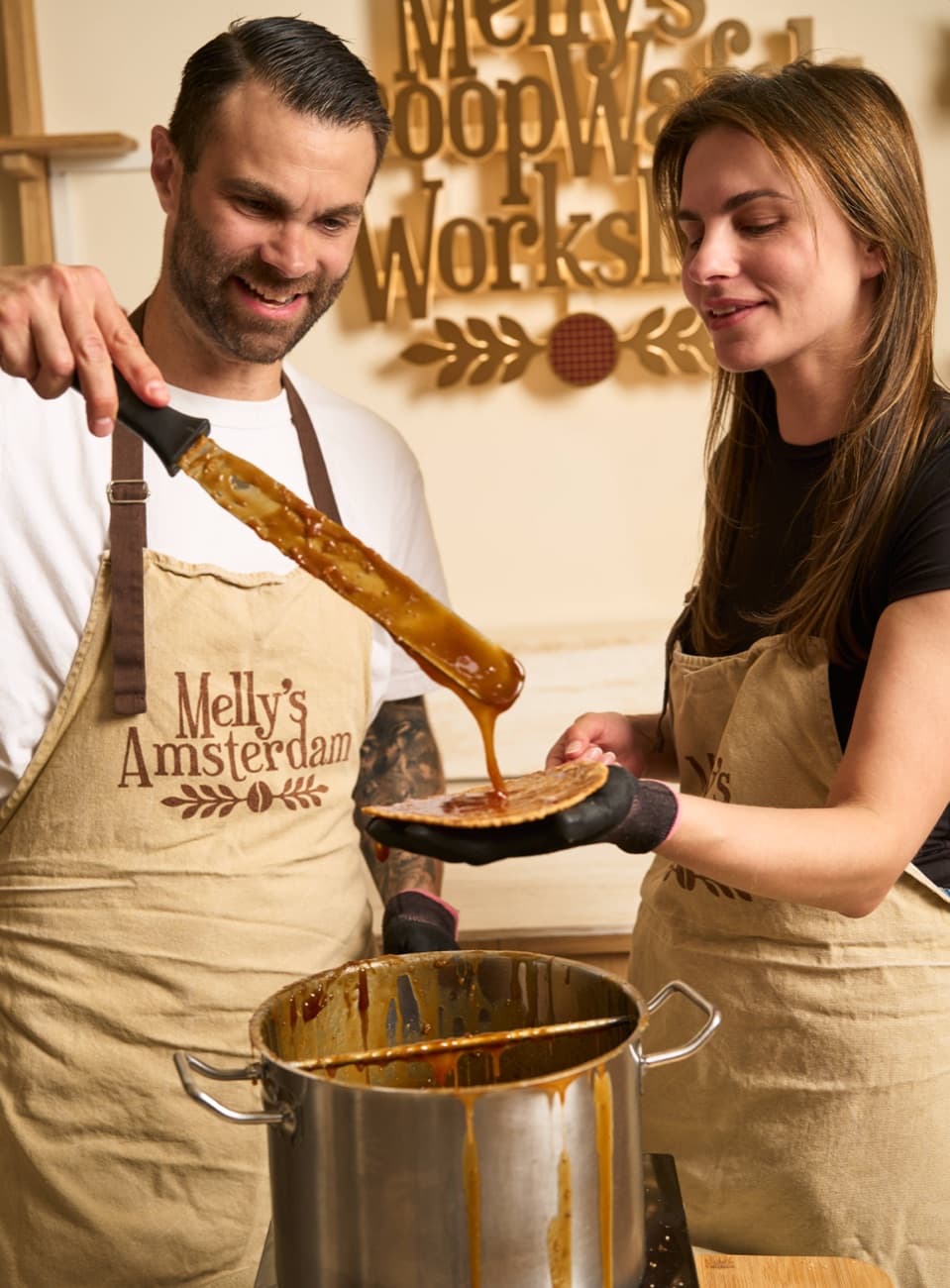
And the stroopwafel: come and have one warm at our shop on Nieuwezijds Voorburgwal, two minutes from Dam Square, or press your own in the stroopwafel workshop.
What to take home
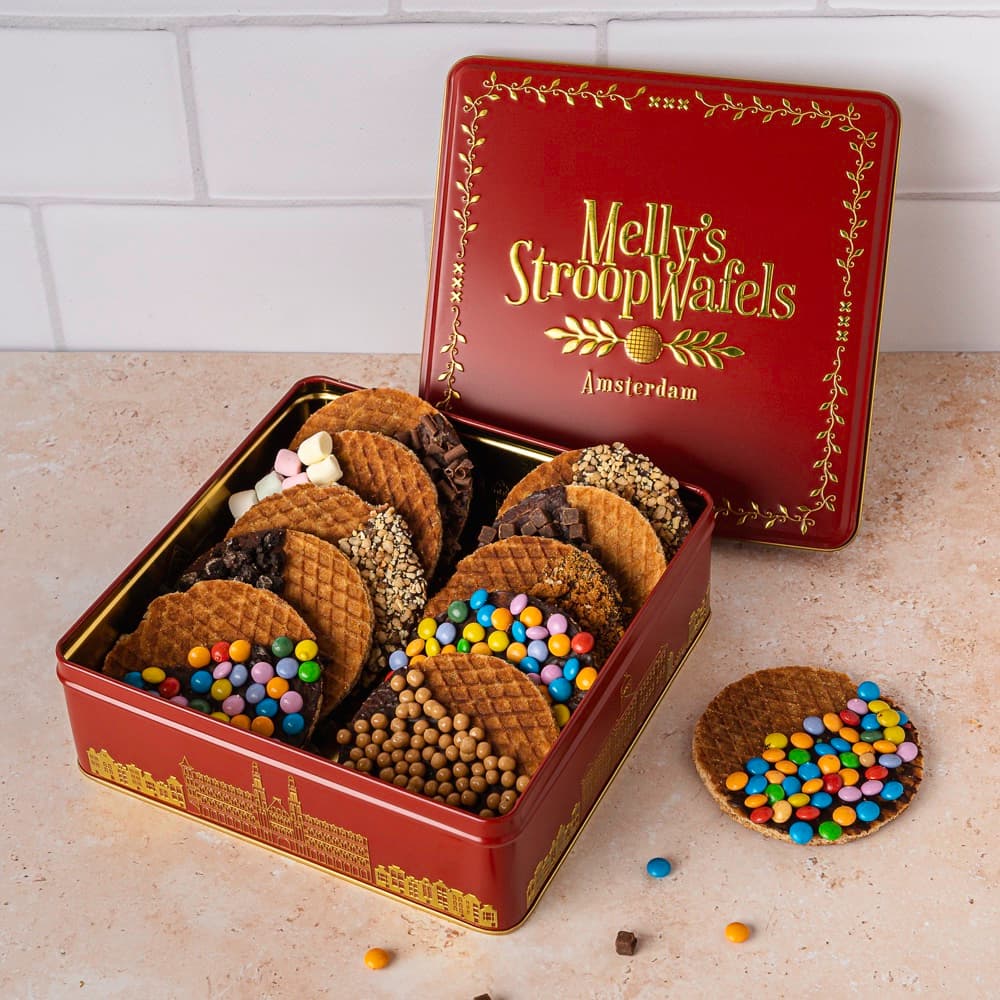
Most of this list does not travel. Fried snacks and herring are for eating on the spot. What does travel: vacuum-packed cheese, a bag of drop for the brave, a box of hagelslag, and stroopwafels, which are the reason they became the classic Dutch souvenir. Our stroopwafel gift tin holds 10 fresh stroopwafels, or 8 if you pick vegan or gluten-free, and is sturdy enough for a suitcase. And if you are already home and missing them, we ship.
Taste it warm in Amsterdam
Order fresh stroopwafels to your door, or learn to make your own at a Melly's workshop in the heart of the city.