Christmas in the Netherlands: Sinterklaas, Two Christmas Days and the Sweets
Two celebrations, three weeks apart, and a different set of sweets for each. Here is how December works in the Netherlands.
By Daniel MellicovskyBaker and owner, Melly's Stroopwafels
December in the Netherlands has two celebrations, not one. On 5 December the Dutch celebrate Sinterklaas, with presents, poems and a very particular set of sweets. Three weeks later comes Christmas, which here lasts two days. Then on New Year’s Eve the whole country eats oliebollen. If you have just moved here, are visiting in December or have Dutch colleagues asking whether you are joining the lootjes, this is how it fits together, and what you eat at each stage.
Sinterklaas, 5 December
Sinterklaas is the Dutch Saint Nicholas: a tall, white-bearded bishop with a red mitre and a staff who, according to the story, lives in Spain and sails to the Netherlands every November on a steamboat. His arrival, the intocht, is broadcast on national television in mid-November, and most towns hold their own. In Amsterdam he arrives by boat and rides through the city centre on his white horse.
From then until 5 December, children put a shoe by the fireplace or the door at night, with a carrot for the horse and a drawing for the saint, and sing a Sinterklaas song. This is called schoen zetten. In the morning there is often a small present or a handful of sweets in the shoe. Sinterklaas has helpers, the Pieten, who do the work on the roofs; these days, in most of the country, they appear with soot smudges from the chimney.
The big night is the evening of 5 December, pakjesavond, or present evening. Presents arrive in a sack, often after a loud knock on the door. Families with older children, and groups of friends and colleagues, draw names (lootjes trekken) so that everyone buys for one person. The present comes with a rhyming poem that gently teases the person who gets it, and sometimes with a surprise: the present hidden inside something homemade, like a papier-mâché version of their bike or their favourite hobby.
The Sinterklaas sweets
- Pepernoten and kruidnoten. The small, round, crunchy spiced biscuits sold by the bag from early autumn are, strictly speaking, kruidnoten. Real pepernoten are softer, chewier and irregular, made with rye flour, honey and anise. Almost everyone calls both pepernoten, and the Pieten throw them by the handful.
- Chocoladeletter. A chocolate letter, usually the first letter of your name, in milk, dark or white chocolate. It turns up in the shoe or next to your plate.
- Speculaas. Thin, crisp spiced biscuits, traditionally pressed into carved wooden moulds with windmills, horses or the saint himself. The spice mix, speculaaskruiden, is cinnamon, nutmeg, cloves, ginger, cardamom and white pepper. Gevulde speculaas is the soft version: two layers of spiced dough around almond paste.
- Taai-taai. Chewy honey and anise biscuits shaped like figures, often Sinterklaas himself.
- Banketletter. Puff pastry rolled around almond paste and shaped into a letter. As a straight log, the banketstaaf, it stays on the table until Christmas.
- Marsepein. Marzipan shaped into fruit, little pigs and all kinds of figures.
Christmas, 25 and 26 December
Christmas in the Netherlands is two public holidays: Eerste Kerstdag (25 December) and Tweede Kerstdag (26 December). Many families split them, one day with each side of the family. Traditionally Sinterklaas is when the presents happen and Christmas is about the tree, the family and the dinner, although more and more families now give presents at both.
- Gourmetten. The most Dutch Christmas dinner there is: a tabletop grill with a hot plate and small pans, and everyone cooks their own little pieces of meat, fish, vegetables and egg at the table. It takes the whole evening, which is the point.
- Kerststol. A sweet bread full of raisins, currants and candied peel, with a log of almond paste through the middle. It is sliced and buttered at breakfast.
- Kerstkransjes. Small ring-shaped butter biscuits with flaked almonds or sugar on top, which you can hang on the tree.
The kerstpakket
One Dutch Christmas tradition happens at work. Many employers give their staff a kerstpakket, a Christmas hamper, or a smaller kerstattentie: a box of food and drink, a gift or a gift card, handed out in the last weeks of December. For many people it is the first sign that the holidays are near. If you are the one choosing it this year, we make gift tins for companies, with your logo on a sticker or a printed ribbon. Have a look at our company gifts.
Oud en nieuw, 31 December
On New Year’s Eve, oud en nieuw, the Dutch eat oliebollen: balls of yeast dough with raisins or currants, deep-fried and buried in icing sugar. You buy them from the oliebollen stalls that appear in every town in the last weeks of the year, or fry them at home on the 31st. Next to them you will find the appelflap, a puff pastry turnover filled with apple and cinnamon.
Where stroopwafels fit in
Strictly speaking, nowhere. The stroopwafel is not a December treat but an every-day-of-the-year one, eaten warm from a market stall or on top of a cup of coffee. But it is one of the classic things to bring home from the Netherlands, and December is gift season, so a lot of them end up in shoes, kerstpakketten and suitcases going home for the holidays.
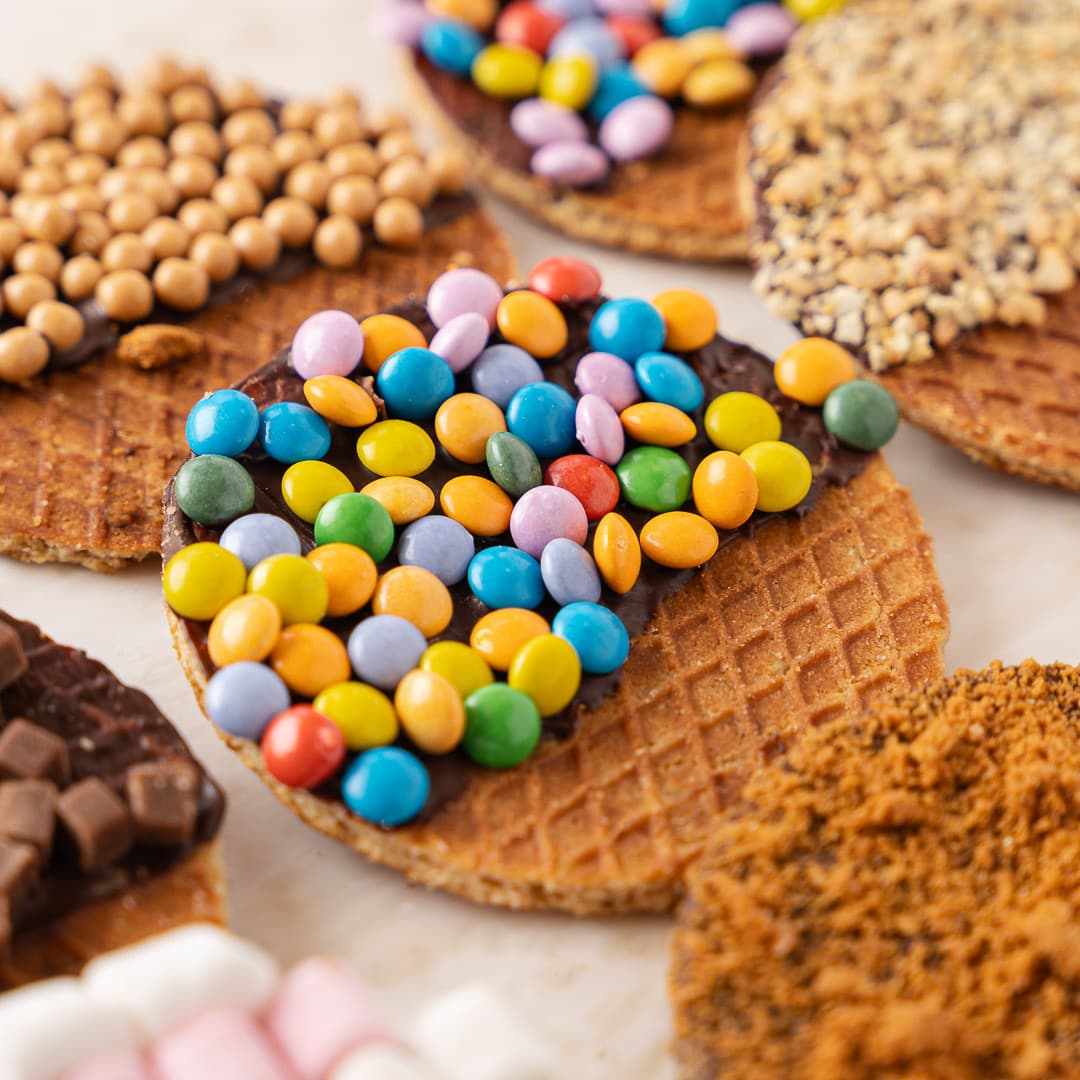
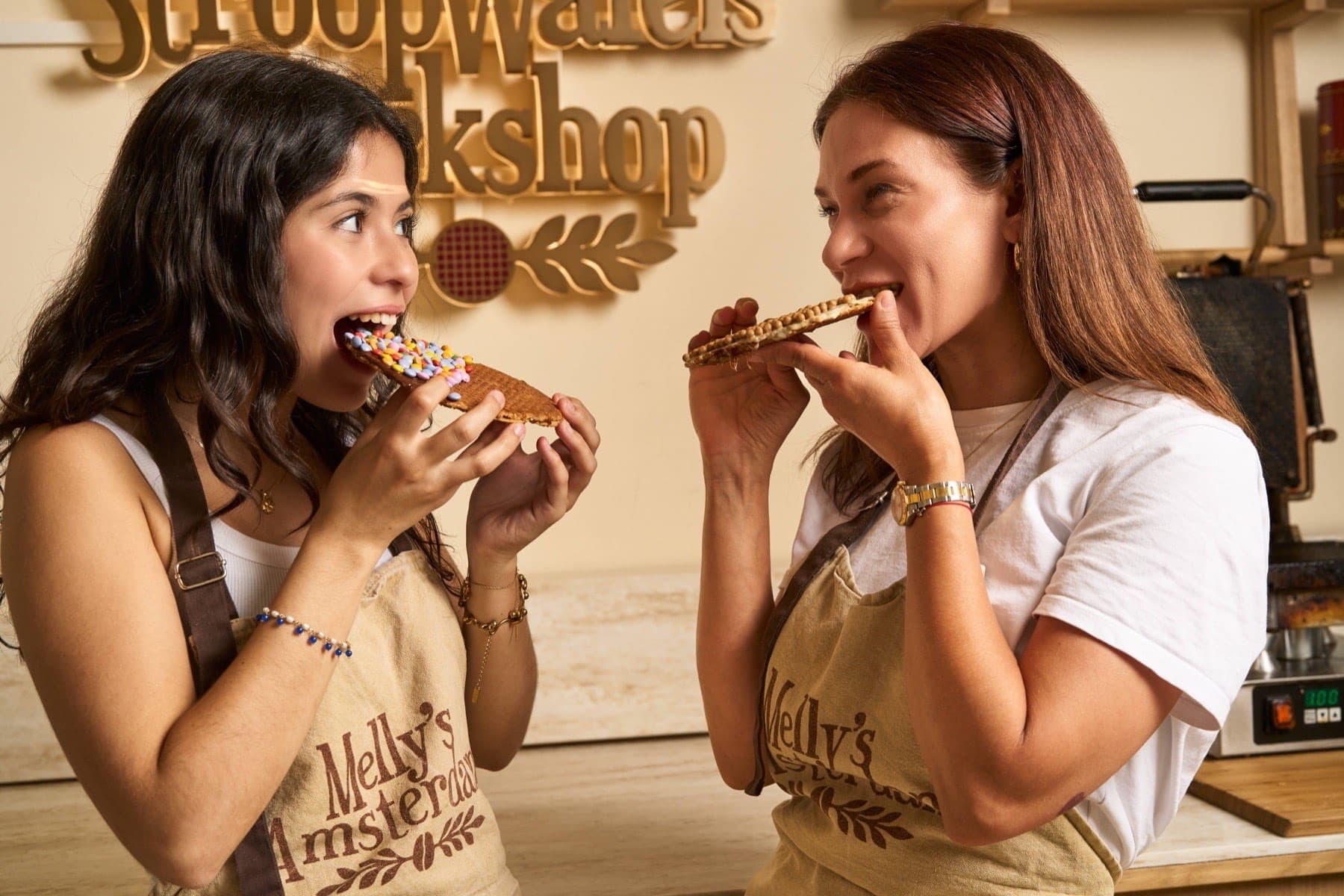
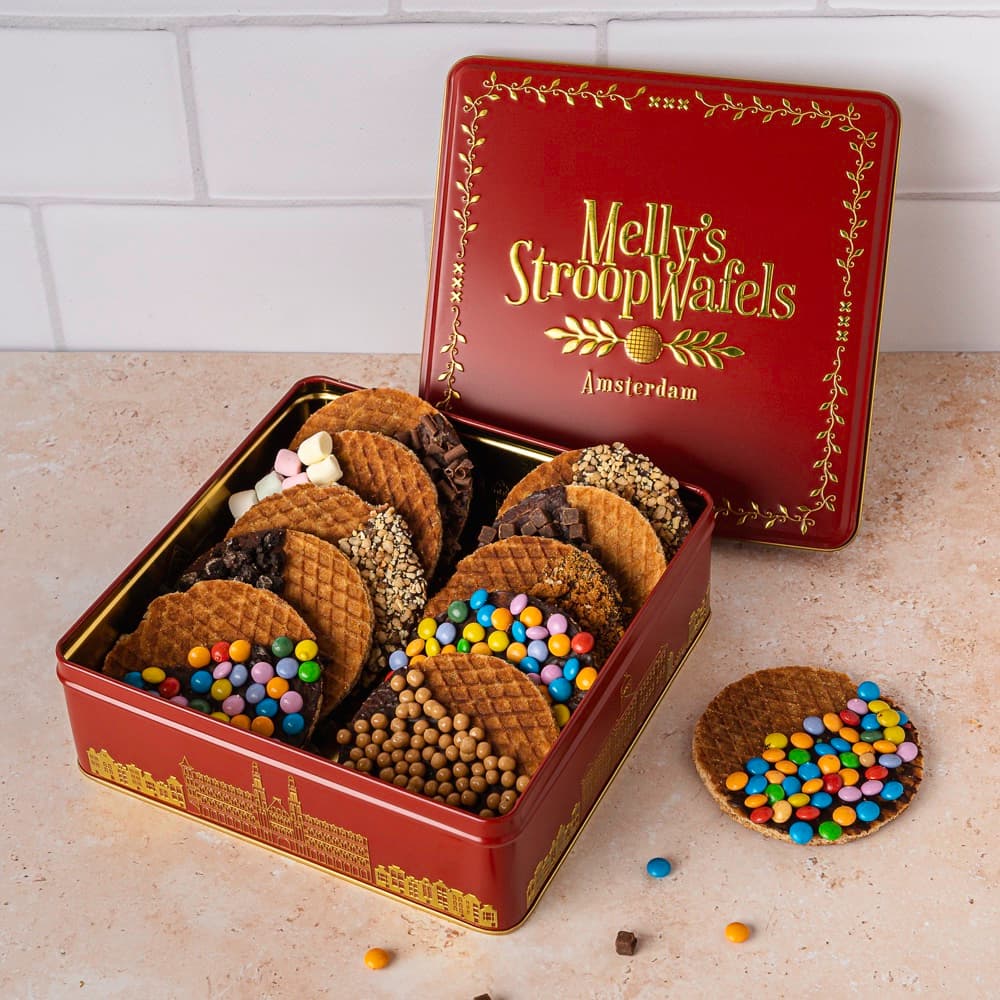
Our stroopwafel gift tin holds 10 fresh stroopwafels, or 8 vegan or gluten-free, comes in red, brown or Delft Blue and stays fresh for up to six weeks. The gift box has 12 decorated ones, half-dipped in toppings like chocolate, caramel or Biscoff, the caramelised Belgian cousin of speculaas. Both ship across Europe, the UK, Switzerland, Norway and the US. If they need to arrive before the 5th or the 25th, order early: parcels everywhere are slower in December. And if you are in Amsterdam for the holidays, you can press your own in our stroopwafel workshop.
Taste it warm in Amsterdam
Order fresh stroopwafels to your door, or learn to make your own at a Melly's workshop in the heart of the city.