Oliebollen: The Dutch New Year's Doughnut and How to Make It
Every winter they appear on Dutch street corners: fist-sized doughnuts buried in icing sugar. What they are, and how to fry your own.
By Daniel MellicovskyBaker and owner, Melly's Stroopwafels
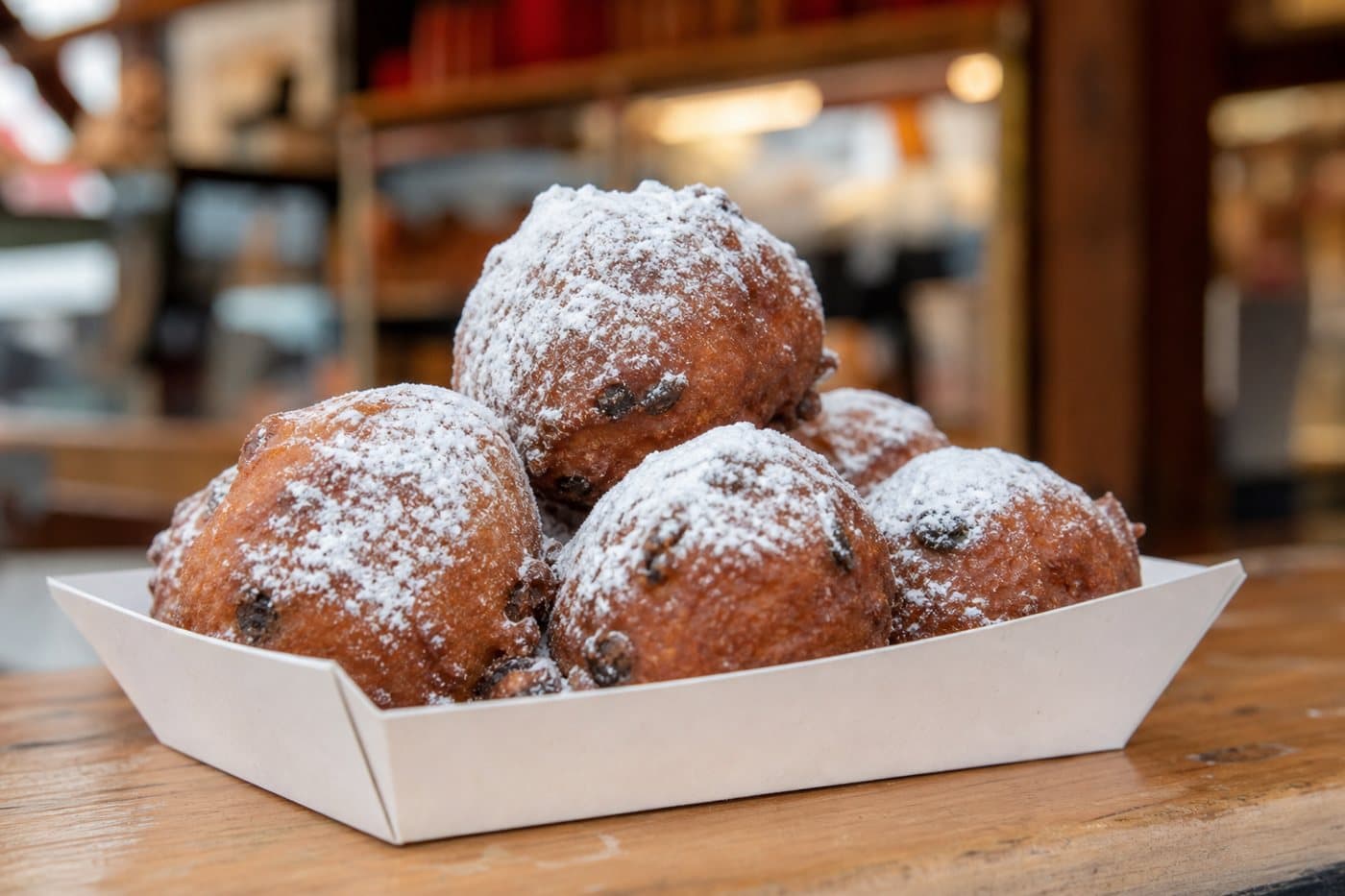
From about November, small wooden stalls start to appear on Dutch squares and street corners, and the smell of hot oil and sugar drifts down the road. They sell oliebollen, which translates literally as "oil balls": fist-sized doughnuts of yeast batter, usually with raisins and currants, deep-fried and buried in icing sugar. On New Year's Eve, almost every house in the Netherlands has a bag of them on the table.
We are a stroopwafel bakery and we do not make them, but no one who loves Dutch sweets should miss them. Here is what they are and how to fry them at home. The recipe makes about 20 and takes 20 minutes of work, an hour of rising and half an hour at the fryer.
What an oliebol is
Think of a doughnut without a hole and without the neat shape. The batter is too wet to roll, so it goes into the oil in rough spoonfuls, and those uneven edges turn into the crisp bits everyone wants. Inside it is light and a little bready, and not very sweet: nearly all the sugar is on the outside. The Dutch have been frying something like it for a long time. A recipe for oliekoecken appears in De Verstandige Kock, a Dutch cookbook from 1667.
They are for winter and for New Year above all. For the rest of the December table, including pepernoten and banket, see our guide to Christmas in the Netherlands.
Ingredients
- 500 g plain flour
- 7 g dried yeast (one sachet)
- 2 tablespoons sugar
- 1 teaspoon salt
- 450 ml whole milk, lukewarm
- 1 egg
- 150 g raisins and currants
- 1 firm apple, peeled and finely diced
- The zest of 1 lemon
- About 2 litres of sunflower oil, for frying
- Plenty of icing sugar
Make the batter
- Soak the raisins and currants in hot water for 15 minutes, then drain them and dry them well on a clean tea towel. Wet fruit makes the oil spit.
- Mix the flour, yeast, sugar and salt in a large bowl. Add the milk and the egg, and beat with a wooden spoon for a few minutes until the batter is smooth and stretchy. It should be thick and sticky, far too wet to handle.
- Fold in the fruit, the apple and the lemon zest.
- Cover the bowl with a damp cloth and leave it somewhere warm for about an hour, until the batter has doubled and is full of bubbles.
Fry them
- Heat the oil to 175 to 180 °C in a deep fryer or a heavy, deep pot, filled no more than halfway. Use a thermometer if you are using a pot: the temperature decides everything here.
- Dip two large spoons in the oil. Scoop up a ball of batter with one and push it into the oil with the other, close to the surface and away from you. Do not stir the batter first, or you lose the air.
- Fry 5 or 6 at a time, for 5 to 6 minutes, turning them halfway if they do not roll over on their own. They should be a deep brown all round.
- Cut the first one open. If it is doughy in the middle, the oil is too hot, so turn the heat down a little and let the temperature settle between batches.
- Lift them onto kitchen paper, let them cool for a few minutes and dust them heavily with icing sugar just before serving.
Hot oil deserves your full attention. Stay with the pot, keep children and pets out of the kitchen, and never put water on burning oil: turn off the heat and cover the pot with a lid.
When it goes wrong
- Greasy and heavy. The oil was too cool, usually because too many went in at once. Fry fewer and wait for the temperature to come back.
- Dark outside, raw inside. The oil was too hot, or the balls were too big. One large spoonful of batter is enough.
- Dense, not airy. The batter did not rise for long enough, or the milk was hot enough to harm the yeast. Lukewarm means comfortable on your finger.
- Long tails and odd shapes. That is normal, and the crisp tails are the best part.
Storing and reheating
Oliebollen are best within a few hours. Keep leftovers in a paper bag, not in plastic, which turns them soggy. The next day, warm them for about 5 minutes in an oven at 180 °C and dust them with fresh icing sugar. They also freeze well for a month or two if you skip the sugar. Reheat them from frozen in the oven.
Other things from the same stall
- Appelbeignets. Thick rings of apple dipped in batter and fried, then dusted with sugar. The other classic of the season.
- Appelflappen. Triangles of puff pastry filled with apple and cinnamon, coated in sugar.
For the rest of the country's food, from poffertjes to bitterballen, see our guide to traditional Dutch food.
A Dutch sweet you can make with us
Oliebollen are a job for your own kitchen or the stall on the corner. Stroopwafels are our part of the story. If you are in Amsterdam this winter, in our stroopwafel workshop you press the waffles on a hot iron, fill them with warm caramel and take your batch home. You can also eat one fresh at our shop on Nieuwezijds Voorburgwal. If you are further away, a stroopwafel gift tin is an easy Dutch present to send for the holidays.
Taste it warm in Amsterdam
Order fresh stroopwafels to your door, or learn to make your own at a Melly's workshop in the heart of the city.